At last you have found the perfect store to shop for your fine piercing jewelry from the comfort of your own home. At FreshTrends we design and create custom body jewelry from solid 14k gold and platinum. We are a small business located in Palm Beach, Florida dedicated to making high quality gold body jewelry that you will never want to take off.
Body Jewelry Size Guide: Gauge, Length & Diameter (Plus Care Tips)
Body Jewelry Size Guide: Gauge, Length & Diameter (Plus Care Tips)
By Jess L03/02/2026
If you’ve ever fallen in love with a piece of body jewelry online—only to worry it won’t fit—you’re not alone. Body jewelry size can feel confusing at first because every placement (and every body) is different.
This guide breaks down the sizing essentials—gauge, length, and diameter—and shares practical tips for wearing, cleaning, and handling your jewelry so it stays comfortable and secure.
Quick reminder: If you have a fresh piercing or irritation, follow your professional piercer’s aftercare advice first. This post is educational and not medical guidance.
At-a-Glance: What Size Do I Need?
To shop confidently, you need three measurements:
▪️Gauge: thickness of the bar that goes through the piercing
▪️Length: wearable bar length for straight jewelry (labrets, barbells)
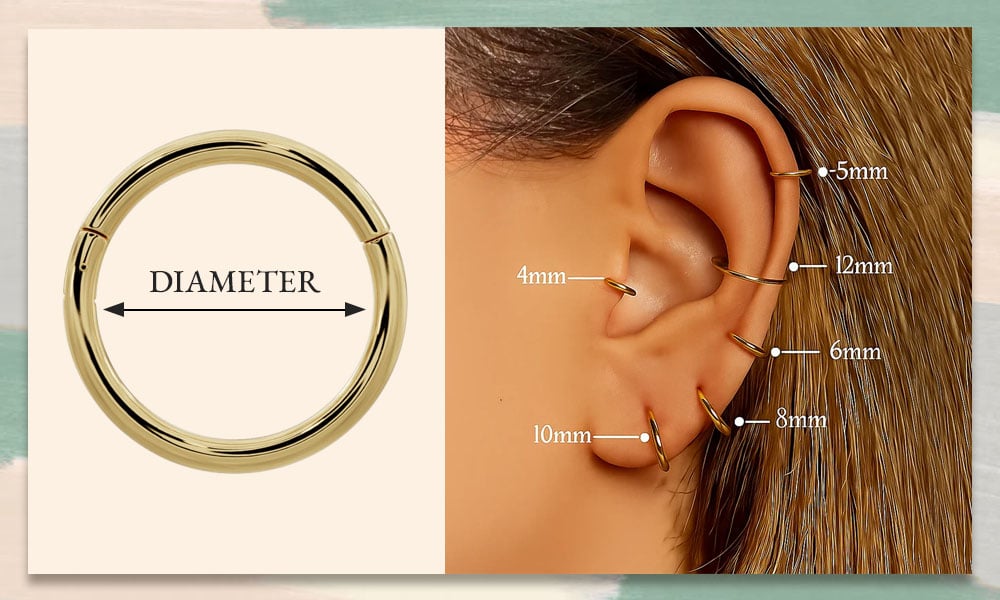
▪️Diameter: inside width for hoops (nose rings, clickers, seam rings)
The easiest way to confirm your exact size is to check with your piercer or measure your current jewelry. If you want a brand-specific reference, Fresh Trends keeps a detailed measuring guide here: Body Piercing Size Guide.
Step 1: Understand Gauge (Thickness)
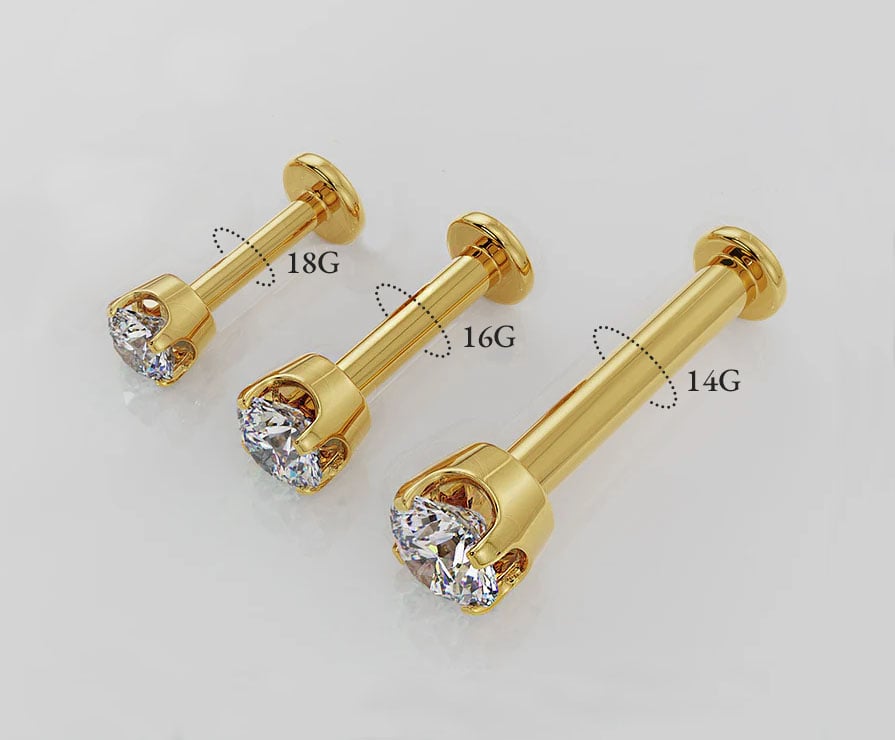
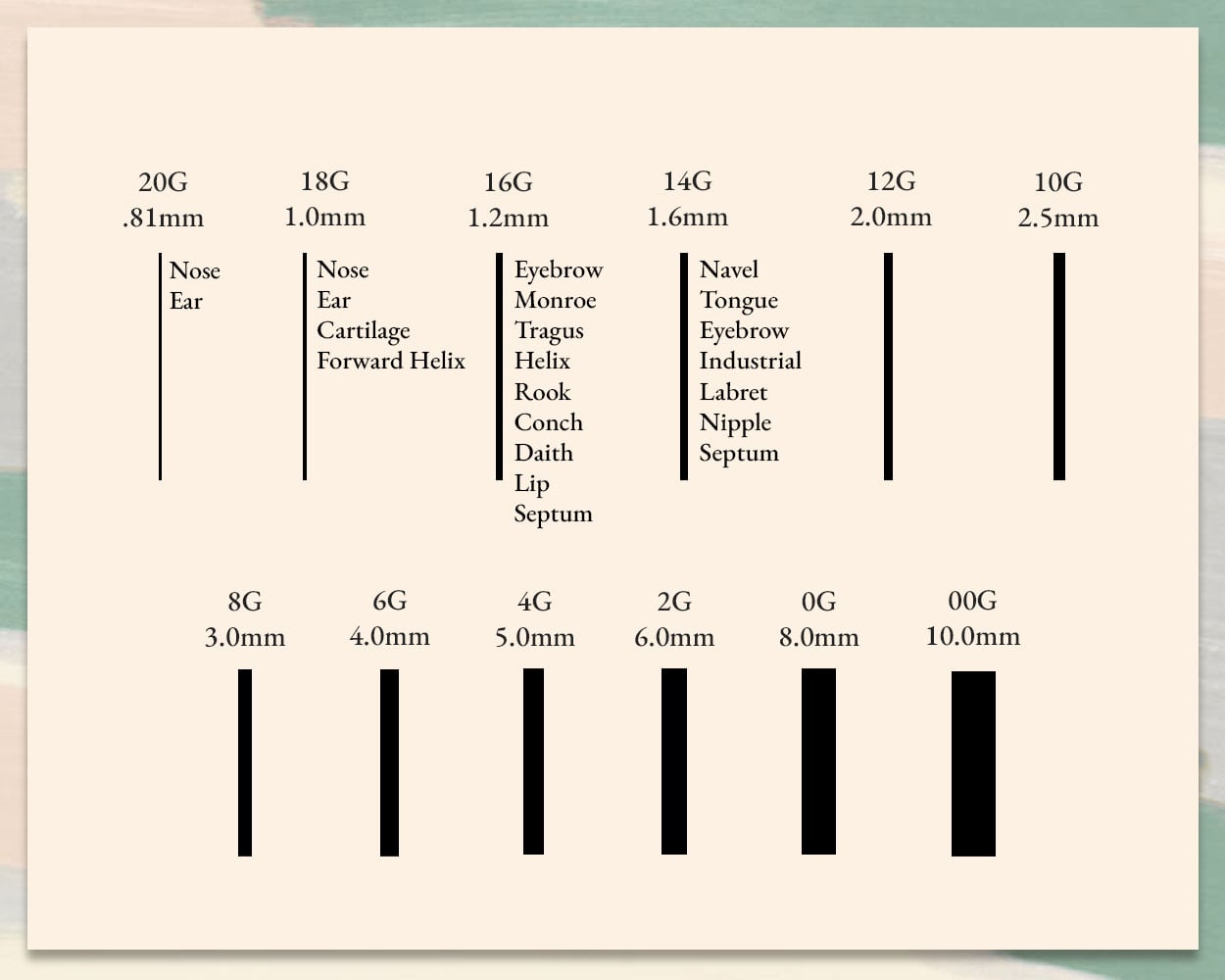
Gauge (written like 16G or 14g) refers to the thickness of the bar that sits inside your piercing. Here’s the part that trips people up:
▪️Lower number = thicker jewelry (example: 14G is thicker than 18G)
1. Ask your piercer (fastest, most reliable—especially for newer piercings)
2. Check your original paperwork or message notes from the studio.
3. Measure your current jewelry using a gauge card, calipers, or a trusted size chart.
Pro tip: Write your body jewelry sizes down in your phone notes (placement + gauge + length/diameter). It saves time every time you shop.
Step 2: Measure Length (For Barbells & Labrets)
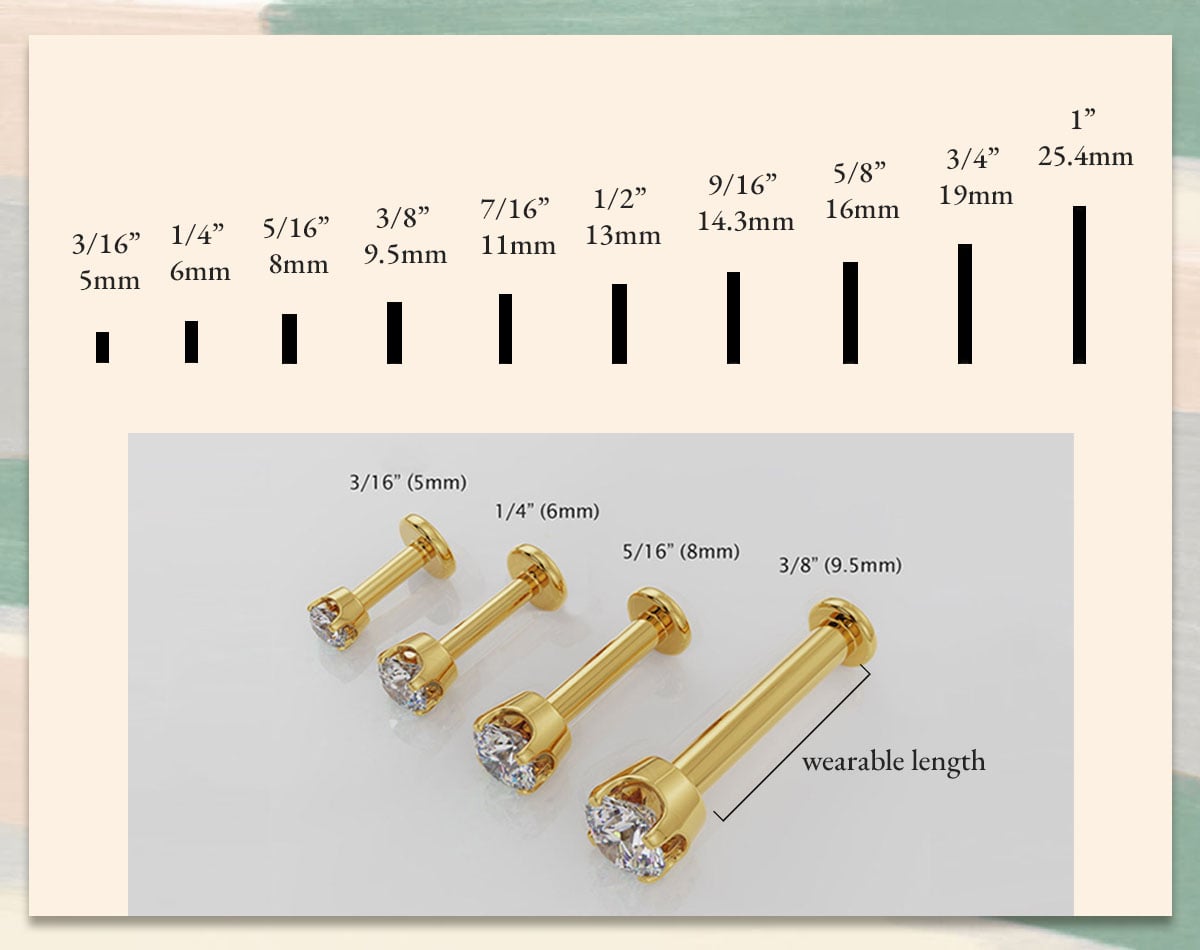
Length is the wearable distance of a straight post (like a labret stud or barbell). It’s measured along the bar not including balls, gems, or decorative tops.
Why length matters:
▪️Too short can feel tight, cause pressure, or irritate tissue.
▪️Too long may snag, shift, or feel less secure.
Common situations where length varies:
▪️Lip piercings and labrets (anatomy and swelling can change what feels comfortable)
▪️Cartilage placements (helix, tragus, conch) where thickness differs person to person
▪️Fresh vs. healed piercings (your piercer may start longer to accommodate swelling)
Diameter is used for jewelry shaped like a circle: hoops, clickers, seam rings, and captive bead rings. It’s measured from the inside of the hoop across its widest point.
Choosing the right diameter:
▪️For a snug look, you’ll typically choose a smaller inside diameter.
▪️For a looser drape or specific placements, a slightly larger diameter may sit better.
▪️Comfort matters: the goal is a hoop that rests smoothly without pulling or pressing.
If you’re unsure, start by matching the diameter of the jewelry you already wear comfortably, then adjust based on the look you want.
Everyday Care Tips for Body Jewelry (So It Stays Secure)
1. Build a quick “check-in” routine A simple daily check helps prevent surprises—especially for facial jewelry that can loosen from towels, clothing, or regular movement. Once a day (morning or night), confirm that ends and settings feel secure.
2. Be gentle with towels, hair, and clothing Snags are one of the most common causes of irritation or lost ends. Pat dry instead of rubbing, and be mindful when changing clothes—especially with fresh piercings or dangling designs.
3. Avoid over-tightening threaded ends With threaded jewelry, tighter isn’t always better. Over-tightening can make removal difficult and may stress the threads. If something feels secure, leave it—then re-check in a day or two.
4. Handle jewelry in a safe setup
▪️Insert/remove jewelry in a well-lit space. ▪️Avoid thick carpet so small pieces are easier to find. ▪️If you’re near a sink, plug the drain first.
Material note: Gold is a precious metal and can be softer than some alternatives. Handle threaded components carefully to protect the integrity of the threads.
Shopping Tip: Fit + Materials = Comfort
Once you know your measurements, the next upgrade is choosing better materials and construction for everyday wear. For many people, nickel-free solid 14k gold and platinum are premium choices—especially when comfort and longevity matter.
▪️Choose solid metals (never plated) for lasting wear.
▪️Prioritize custom fit so jewelry sits smoothly on your anatomy.
▪️Look for secure closures designed for real life—sleep, workouts, and daily movement.
Start by contacting your piercer. If that’s not possible, measure the jewelry you already wear comfortably using a gauge card or a reputable size chart. For hoops, measure inside diameter; for labrets/barbells, measure wearable length.
Yes. Many cartilage and facial piercings can range across gauges and lengths depending on anatomy and placement. That’s why confirming your exact measurements (rather than guessing) is so important—especially when shopping online.
For healed piercings, many people remove jewelry for cleaning or activities. For new piercings, follow your piercer’s guidance. Removing jewelry too early or leaving it out too long may increase the risk of the piercing shrinking or closing.
Normal daily movement, towels, hair, and clothing can slowly loosen ends over time—especially on threaded jewelry. A gentle, once-daily check can help prevent lost ends or unexpected irritation.





Leave A Comment